Water is one of those household essentials that rarely gets a second thought. It comes out of the tap, fills the kettle, runs through the shower, and disappears down the drain. Most days, that’s the end of the story.
Then something changes.
Maybe the water starts tasting a little different. You notice chalky spots around the faucet. Your glasses don’t look quite as clean after washing, or the showerhead seems to clog faster than it used to. These small annoyances can make you wonder whether your home’s water needs some extra attention.
The good news is that water filtration doesn’t have to be complicated. There are several options available, and the right choice depends less on what’s trending and more on what’s actually happening with your water.
Start With the Water You Already Have
Before buying any treatment equipment, take a moment to understand your water source.
Homes connected to municipal supplies generally receive treated water, but the characteristics of that water can still vary. Plumbing materials, local infrastructure, and the age of a home’s pipes may influence taste, odor, or other characteristics by the time water reaches the faucet.
Private wells are different. Homeowners are responsible for monitoring their own water quality, and conditions can change over time.
If you’re noticing a new taste, odor, discoloration, sediment, or mineral buildup, testing the water is often the smartest first step. It gives you useful information rather than leaving you to guess.
Is an Under-Sink Filter Enough?
For many households, the main concern is the water they drink and cook with.
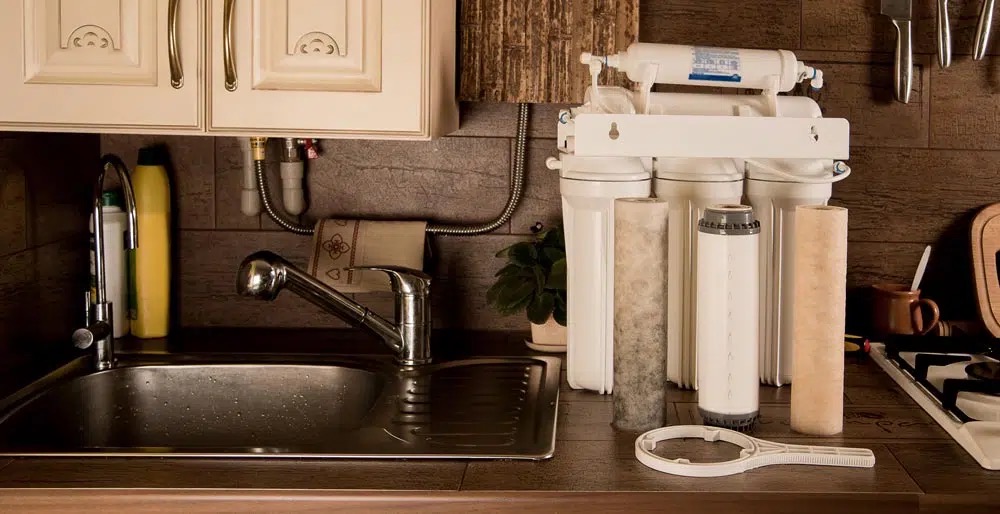
In that situation, an under sink water filter can be a practical option. Installed beneath the kitchen sink, it treats water at a specific point of use instead of treating every gallon entering the house.
This can make sense when your primary goal is improving drinking-water taste or reducing particular contaminants. You don’t necessarily need to treat shower water, toilet water, or outdoor water if those aren’t part of your concern.
Another advantage is that point-of-use systems can be relatively unobtrusive. Once installed, the equipment sits out of sight while filtered water comes through a dedicated faucet or the existing tap, depending on the setup.
Of course, the filter still needs regular replacement. That’s the part homeowners sometimes forget.
Whole-Home Treatment Takes a Different Approach
If your concerns extend beyond drinking water, a broader system may make more sense.
whole home water treatment works at the point where water enters the property, allowing treated water to travel throughout the house. Depending on the equipment, this can address issues such as hardness, sediment, chlorine, or other water-quality concerns.
The benefit is comprehensive coverage. Water used in showers, washing machines, dishwashers, and other fixtures can receive treatment rather than limiting filtration to one faucet.
But whole-home systems aren’t automatically better. They can be more expensive to install and maintain, and the right system depends heavily on the home’s water chemistry.
That’s why testing is so important. There’s no point installing a sophisticated treatment system to solve a problem your water doesn’t actually have.
Hard Water Is a Common Frustration
Hard water doesn’t always create an obvious emergency. Instead, it tends to make itself known through small annoyances.
You may notice white deposits on faucets or shower doors. Soap may seem harder to rinse away. Laundry can feel different, and appliances that use hot water may gradually develop mineral scale.
Hard water is primarily associated with dissolved calcium and magnesium. While it’s not generally considered a reason to panic, excessive hardness can create maintenance headaches.
If your home has significant hardness, a water softener may be worth considering. But once again, testing should guide the decision.
Not every home needs a softener, and filtration and softening aren’t interchangeable. They address different water characteristics.
Well Water Deserves Extra Attention
If your home depends on a private well, water quality shouldn’t be treated as a one-time concern.
Changes in groundwater conditions, heavy rainfall, nearby land activity, or problems with the well itself can affect water quality. Regular testing helps establish whether the water remains within acceptable parameters for its intended uses.
Proper well water treatment can involve different technologies depending on what testing finds. Sediment, iron, sulfur compounds, hardness, and other issues each require different approaches.
This is one area where a generic filter may not be enough.
A qualified water-treatment professional can help interpret test results and recommend equipment based on the actual problem. That’s generally a better strategy than buying a system because its packaging claims to handle “everything.”
Don’t Forget About Filter Maintenance
A water filter can only perform as well as its condition allows.
Filters collect or reduce substances over time, which means their capacity eventually gets used up. Waiting too long to replace them can affect flow and treatment performance.
Create a simple reminder for replacement dates. If you have several filtration stages, keep track of each one separately.
Also watch for changes in water pressure or taste. If something suddenly seems different, investigate instead of assuming the filter is still fine because it hasn’t reached the manufacturer’s suggested replacement date.
Usage varies between households, after all.
A family of six may go through filtration capacity much faster than someone living alone.
Think About Long-Term Costs
The initial price of a filter is only part of the equation.
Consider replacement cartridges, maintenance, electricity, water consumption, repairs, and the expected lifespan of the equipment.
An inexpensive filter that requires frequent cartridge changes may eventually cost more than a system with a higher upfront price but lower ongoing expenses.
Ask about warranties and replacement parts before buying, too. You don’t want to discover three years later that a critical component is difficult to source.
It’s also worth asking what happens if the system needs service. Good support can make ownership much less stressful.
Avoid Buying More Than You Need
Water treatment can become unnecessarily complicated.
A homeowner may start with a simple concern about taste and end up looking at multiple tanks, filters, membranes, and sensors. Sometimes that’s appropriate. Sometimes it’s overkill.
The goal isn’t to have the most equipment in the utility room.
The goal is to have the right equipment.
Start with your water source and test results. Identify the problem. Decide which areas of the home actually need treatment. Then compare systems based on performance, maintenance, cost, and reliability.
That process takes a little patience, but it can prevent an expensive mistake.
Good Water Treatment Should Make Life Easier
The best filtration system is rarely the one with the longest list of features. It’s the one that quietly solves a real problem without creating five new ones.
For some homes, that may mean a compact point-of-use filter under the kitchen sink. Others may benefit from whole-home treatment, particularly when water-quality concerns affect multiple fixtures. Private well owners may need more specialized treatment based on regular testing.
There’s no universal answer, and that’s perfectly fine.
Understand your water first. Choose technology second. Keep the equipment maintained once it’s installed.
That simple approach can turn water treatment from a confusing home-improvement project into something much more manageable. And when your water tastes good, your fixtures stay cleaner, and your equipment works as expected, you may barely think about the system at all.
Honestly, that’s probably the best outcome.