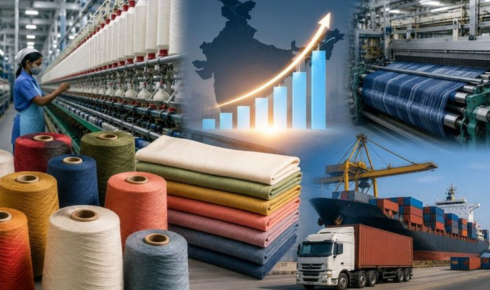
When experienced market participants sit down to review their equity portfolios, few sectors inspire as much nuanced debate as textile stocks — an industry that has historically walked a thin line between commodity-driven pressures and brand-led premiums. Among the names that have commanded sustained attention in recent years, the Trident share price has become a reference point for investors trying to understand how a mid-cap industrial company can build lasting market credibility. The company’s tale is one of a gradual ascension based on operational clarity, financial discipline, and a true knowledge of what the domestic and export markets require, rather than an abrupt increase propelled by speculative exuberance. Investors who have chosen to patiently research this company have discovered a company that values meticulous analysis far more than snap judgments.
A Company Built on Operational Clarity
Over the years, Trident Limited has created a corporate architecture that is challenging to swiftly imitate. It holds a special place in the Indian industrial landscape thanks to its integrated production technique, which includes yarn, paper, and home textiles. The business has organized itself around two different but complimentary sectors rather than relying on a single source of income.
The home textiles market, which manufactures towels, bed linens, and other products, operates at a scale that enables significant cost advantages. Despite making a smaller contribution, the paper division provides a layer of revenue stability that helps the company weather weaker textile market circumstances. This structural balance is not coincidental; rather, it is the result of years of careful capital allocation and planning that have progressively increased investor confidence in the business.
Financial Discipline That Sets This Company Apart
How well a business handles its balance sheet during challenging times is one of the most significant signs of its quality. Over time, Trident has shown a commendable dedication to lowering its debt load while continuing to invest in technological advancements and capacity development. This strategy indicates a management team that considers decades rather than quarters to investors that place a high value on both financial health and growth measures.
Cash flows have increased gradually as a result of the company’s persistent focus on increasing its return on equity and shortening its working capital cycle. This combination produces a positive feedback loop that improves the company’s financial position year after year: improved margins are driven by operational efficiency, which in turn produces greater cash flows. It is precisely this kind of compound improvement that long-term investors in Indian equities search for.
How Retail Investors Are Responding
An completely new class of investors has entered the Indian stock market as a result of its democratization during the last ten years. Retail players from smaller cities, young professionals, and first-time investors have started assessing industrial companies with the same zeal that was formerly exclusive to technology or pharmaceutical equities. Textile manufacturing firms with solid fundamentals have experienced an increase in interest within this larger trend.
In recent years, Trident’s retail stockholders have significantly increased. This increasing involvement is indicative of a sincere attempt by a portion of the investing public to comprehend the companies that underpin the equities they purchase, rather than merely speculative curiosity. increased access to annual reports, investor education, and the ease of digital platforms have all contributed to a more informed retail base that is beginning to appreciate the long-term value embedded in quality manufacturing businesses.
The Export Advantage and Its Domestic Implications
India has long had a structural edge in the textile industry thanks to its plentiful supply of cotton, highly qualified labor force, and decades of institutional expertise. Using these advantages, Trident has established a strong export presence, especially in home textiles intended for institutional customers and major retail chains in the nation’s important trading partners.
The company has been able to acquire market segments where price is not the only deciding factor because of its ability to meet premium product requirements. It is now a popular supplier to discriminating customers thanks to its quality certifications, ethical sourcing methods, and reliable delivery schedules. Domestically, the company is well-positioned to take advantage of new demand tailwinds created by rising household income levels and the growing appetite for branded home textile products.
Why Investor Confidence in This Sector Is Rebuilding
India’s textile industry saw a protracted era of competitive upheaval and margin compression. Even the most resilient businesses were put to the test by challenges like fluctuating raw material prices, high shipping costs, and changing export dynamics. Nonetheless, companies that overcame these difficulties without jeopardizing their fundamental financial stability have prospered.
A more stable raw material environment, government policy tailwinds like the Production Linked Incentive scheme, and increasing margins have all contributed to the steady restoration of investor confidence in high-quality textile businesses. Nowadays, companies with solid balance sheets, diverse revenue streams, and experienced management teams are seen as true long-term value builders rather than heritage industrial plays. For investors willing to look past short-term noise, this sector offers a compelling combination of value, growth, and dividend income that is increasingly difficult to ignore in a broader market characterised by high valuations across other segments.